
Modern computing relies heavily on storage technology to keep data accessible and secure. When evaluating hardware, understanding the differences between solid state drives and hard disk drives explained is essential for optimizing system performance, reliability, and cost-efficiency. While both components serve the same fundamental purpose-storing operating systems, applications, and personal files-they utilize entirely different mechanical and electronic architectures.
The Mechanical Architecture of Hard Disk Drives
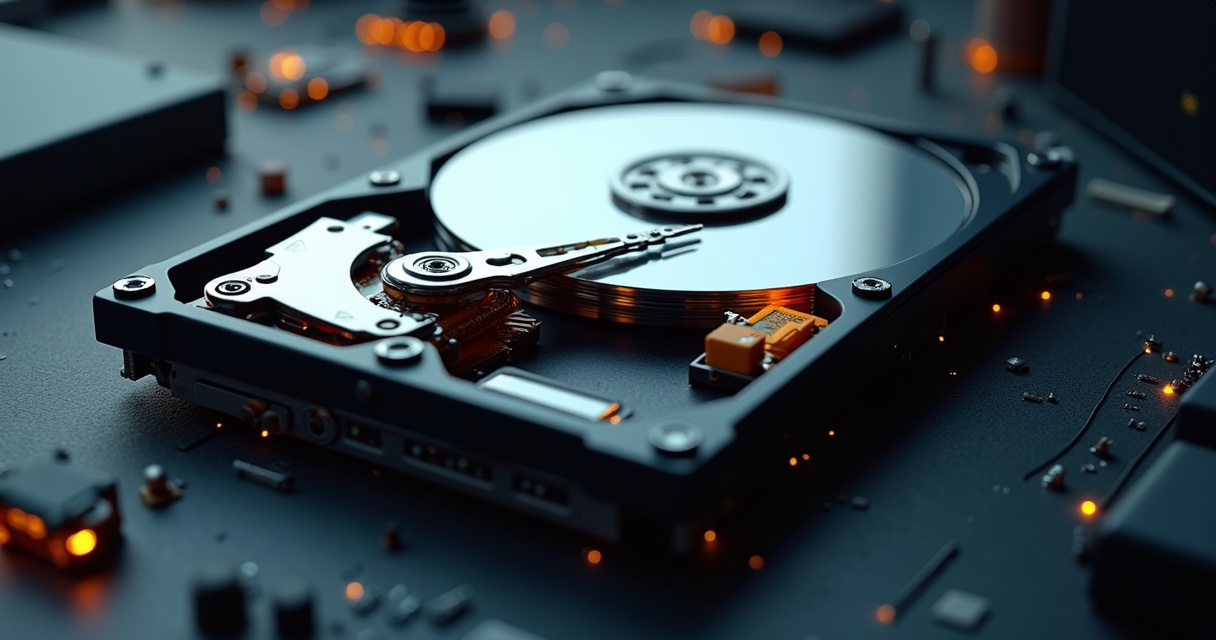
Hard Disk Drives (HDDs) represent a mature technology that has dominated the computing landscape for decades. An HDD operates using physical components, primarily consisting of magnetic platters that rotate at high speeds. A mechanical arm with a read/write head moves across these platters to access or store data, functioning similarly to a record player.
The performance of an HDD is largely dictated by its rotational speed, typically measured in revolutions per minute (RPM). Standard consumer drives often operate at 5,400 or 7,200 RPM. Because the read/write head must physically travel to the correct location on the disk to retrieve information, these drives suffer from latency, especially when accessing fragmented files. This mechanical nature makes HDDs susceptible to physical damage if the device is dropped or shaken while the platters are spinning. However, HDDs remain the preferred choice for bulk storage due to their significantly lower cost per gigabyte compared to newer alternatives.
The Electronic Efficiency of Solid State Drives
Solid State Drives (SSDs) represent a shift toward flash-based storage, which relies on NAND flash memory chips rather than moving parts. Because SSDs have no physical components that need to rotate or move, they provide near-instantaneous access times. When a user requests a file, the controller on the SSD identifies the data location electronically, allowing for data retrieval in mere microseconds.
This architecture translates into faster boot times, quicker application launches, and a more responsive system overall. Furthermore, the lack of moving parts makes SSDs inherently more durable. They are resistant to the physical shocks and vibrations that would typically cause catastrophic data loss in an HDD. While the price per gigabyte for SSDs has dropped significantly, they still command a premium, leading many users to employ a hybrid strategy-using a high-speed SSD for the operating system and a high-capacity HDD for archival storage.
Performance Benchmarks and Real-World Speed
When comparing these two technologies, performance differences become apparent during intensive tasks. An HDD typically offers sequential read/write speeds ranging from 80 to 160 MB/s. In contrast, even a standard SATA-based SSD can reach speeds of 500 MB/s, while modern NVMe SSDs can exceed 7,000 MB/s.
Beyond raw speed, input/output operations per second (IOPS) serve as a critical metric for system responsiveness. SSDs excel at random read/write operations, which are common during daily tasks like updating software or running multiple background processes. HDDs struggle in these scenarios because the mechanical arm must constantly reposition itself, creating a performance bottleneck. For users engaged in video editing, high-end gaming, or complex database management, the transition to SSD technology provides a noticeable improvement in workflow efficiency.
Durability and Longevity Considerations
The lifespan of a storage drive is often measured by its endurance rating and physical resilience. HDDs are prone to mechanical wear and tear over time. Bearings can fail, and the motor responsible for spinning the platters can eventually seize. These drives are also sensitive to environmental factors, such as extreme heat or strong magnetic fields, which can lead to data corruption.
SSDs face a different challenge: the wear of flash memory cells. Every time data is written to a NAND cell, it undergoes a microscopic degradation process. Manufacturers mitigate this by using wear-leveling algorithms, which distribute data writes evenly across all available cells to prevent any single area from wearing out prematurely. Most modern SSDs include a Terabytes Written (TBW) rating, providing a clear expectation of the drive’s lifespan under normal usage conditions. While HDDs may last for many years if handled with care, SSDs offer superior protection against physical accidents, making them ideal for mobile devices like laptops.
Comparison Table: HDD vs. SSD
| Feature | Hard Disk Drive (HDD) | Solid State Drive (SSD) |
|---|---|---|
| Technology | Magnetic spinning platters | NAND flash memory |
| Speed | Relatively slow (mechanical) | Very fast (electronic) |
| Durability | Sensitive to physical shock | Highly resistant to impact |
| Noise | Audible spinning/clicking | Completely silent |
| Cost | Low cost per gigabyte | Higher cost per gigabyte |
| Best For | Massive data backups/archiving | OS, apps, and performance tasks |
Power Consumption and Noise Levels
Energy efficiency is a critical factor for portable computing devices. Because HDDs require energy to spin their motors and move the actuator arm, they consume more power and generate more heat during operation. This mechanical activity also produces audible noise, which can be distracting in quiet environments.
SSDs operate silently and require significantly less power, which can extend the battery life of laptops and tablets. In data center environments, the cumulative energy savings of using SSDs over HDDs can lead to lower operational costs and reduced cooling requirements. This shift toward flash storage has been a primary driver in the development of thinner, lighter, and more energy-efficient portable electronics.
Choosing the Right Storage Solution
Selecting the appropriate drive depends entirely on the specific requirements of the user. For a desktop computer used primarily for storing large media libraries, such as high-resolution photographs or video archives, an HDD offers the most economical solution for long-term storage. The ability to purchase several terabytes of space at a relatively low cost makes HDDs the standard for archival purposes.
However, for a primary drive that holds the operating system, web browser, and frequently used applications, an SSD is the superior choice. The speed benefits of an SSD transform the user experience, eliminating the sluggishness often associated with system updates and background tasks. Many professional workstations now utilize a dual-drive configuration: a fast NVMe SSD for the system drive and a secondary, high-capacity HDD for storing completed projects and cold data.
Conclusion: Future Trends in Storage
The differences between solid state drives and hard disk drives explained highlight the ongoing evolution of data storage. While HDDs continue to serve a purpose in high-capacity storage tiers, the industry is clearly trending toward the dominance of flash-based solutions. As NAND manufacturing costs continue to decline and capacities increase, the gap between these two technologies will likely narrow, potentially relegating mechanical drives to niche enterprise applications or specialized archival roles. For the average consumer, investing in SSD technology remains the most impactful hardware upgrade for enhancing computer performance. When planning a system build or an upgrade, prioritizing an SSD for the boot drive ensures a responsive, reliable, and efficient computing experience for years to come.
